

Editorial Summary of Critical Reception
(With Copywriter’s Insight by Tony-Mike Edozie)
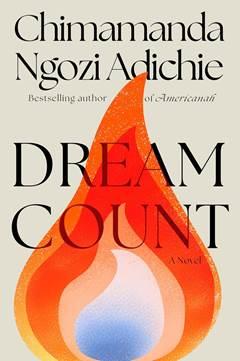
Chimamanda Ngozi Adichie’s Dream Count is not just a return to fiction—it is a literary homecoming that critics across the globe are calling one of the most anticipated and emotionally resonant novels of 2025.
From The New York Times to Kirkus, the consensus is clear: Adichie has delivered a novel of rare tenderness, wit, and moral clarity, composed of four interwoven stories that feel both timely and timeless.
A Cloudlike Contour, a Crystal-Clear Voice
“Innovative,” said The New York Times. Dream Count, they noted, floats with the disorientation of a pandemic-ravaged world, where language is both refuge and battleground. Adichie’s sensitivity to “the hierarchies of language” and her wariness of “jargon misuse” is praised as one of her “superpowers.”
Financial Times adds a layer of fire: this book isn’t just tender—it’s furious with moral clarity. Adichie, the review says, attempts to “write a wrong in the balance of stories.” And she does it with what FT calls “clear-eyed realism, but touched by tenderness.”
That duality is at the heart of the book’s resonance—and its copywriting genius. The work doesn’t shout its truth. It breathes it.
Character-Driven, Globally Rooted
The novel orbits four distinct women—Chiamaka, Zikora, Omelogor, and Kadiatou—whose lives are richly layered, sometimes overlapping, often standing apart. As The Wall Street Journal puts it, they are “linked without being integrated, like tapestries on the four walls of a room.”
These characters aren’t written to resolve each other. They exist to reflect, irritate, support, or misread one another—just like real people do. “They tend to be better at diagnosing each other’s problems than facing their own,” WSJ notes—a truth that resonates deeply, particularly in how Adichie constructs human contradiction with empathy.
Thematic Weight, Delivered Lightly
Critics like The Times (UK) and New Statesman called Dream Count a “multi-layered beauty,” and “a feminist War and Peace,” respectively. The novel tackles major themes—misogyny, late motherhood, cultural relativism, power, race, and post-colonial trauma—not with a sledgehammer but with what Nicola Sturgeon calls “profoundly human experiences.”
As The Guardian notes, Adichie’s sentences are “feather-light” but “build to devastating weight.” From a writer’s perspective, this is emotional architecture: each phrase, structurally lean—yet strategically placed to deliver maximum impact.
Language that Moves Like Music
“Rendered in language that feels entirely natural and yet instinctively poetic,” wrote The Washington Post. Dream Count is alive with contradictions—romantic tension meets political critique; comedic moments sit beside quiet grief; and stylistic brilliance coexists with emotional grit.
Every character’s voice is tuned to their “education and experience,” says Ron Charles of the Post. This is voice-as-identity—a cornerstone of modern character development and a gold standard for narrative authenticity.
Critical and Commercial Triumph
The book has received starred reviews from Kirkus, Publishers Weekly, and Booklist—cementing its status as a literary heavyweight. It’s been called “transfixing,” “intimate,” “scorching,” and “vital.”
As Associated Press declared: Dream Count feels like a homecoming. And indeed, it reminds us why Adichie became a global literary force to begin with—her sturdy empathy, her forthright prose, and her ability to make you feel like you know these women, even if you’ve never met anyone like them.
Copywriter’s Reflection
From a storyteller’s perspective, this book isn’t just to be read—it’s to be felt. It’s a tapestry stitched with silk and steel. And that’s what makes it special: it doesn’t try to be a movement, but it moves you. That’s the kind of storytelling that sells itself—because it sells truth.
“No story is ever just a single story,” says Adichie through her characters.
And in Dream Count, no emotion is ever just a single feeling.
It’s joy laced with rage. Laughter spiked with grief. Memory softened by hope.
For a better experience in commenting on BoldWalk, please ensure you are logged in on our site before commenting or simply use any of your existing online accounts like google to sign-in. See the dropdown select Login option below.