

In the complex narrative of Nigerian leadership—where visibility often competes with value—Lynda Chuba-Ikpeazu represents a rare blend of public grace and private discipline. From her early days as Nigeria’s first-ever Most Beautiful Girl in Nigeria (MBGN) to her longstanding career in public service, her story is one of consistent evolution, driven by intellect, purpose, and resilience.

As she marks another milestone on June 22, Chuba-Ikpeazu stands not only as a role model for young Nigerian women, but as a continuing force in the country’s legislative and civic development.
A Foundation Rooted in Excellence
Born in 1966 into a family of distinction—her father being the late Chuba Ikpeazu, a former Chief Justice and two-time Chairman of the Nigeria Football Association—Lynda Chuba-Ikpeazu was introduced early to the values of discipline, leadership, and service.
Her education spanned continents: from Nigeria to the United Kingdom and the United States. She holds a bachelor’s degree in Communication, a master’s degree in Business Administration, and a law degree—a combination that positioned her for a career that would bridge sectors, influence, and societal impact.
From National Symbol to International Stage
In 1986, during a vacation in Nigeria, Chuba-Ikpeazu entered and won the inaugural Most Beautiful Girl in Nigeria pageant. Her reign was historic—not only for its symbolism but also for the cultural shift it initiated. She went on to represent Nigeria at Miss Universe 1987, becoming the first contestant to do so since 1964, and later that year, she was crowned Miss Africa.
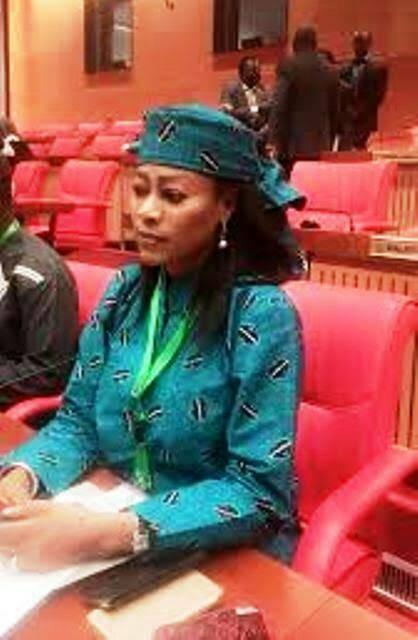
Her emergence as a national and continental figure during this period signaled a new chapter for Nigerian women in the public eye—combining elegance with education, and public image with private ambition.
Transition to Business and Public Service
After her pageantry years, Chuba-Ikpeazu transitioned into the oil servicing industry, establishing herself as a businesswoman in Lagos. Yet it was in the political space that her broader contributions would unfold.
In 1999, with Nigeria’s return to democratic governance, she was elected to the House of Representatives, representing the Onitsha North-South Federal Constituency in Anambra State. As a member of the People’s Democratic Party (PDP), she became part of the country’s foundational group of post-military civilian legislators.
Since then, she has remained an active figure in Nigerian politics, returning to the National Assembly and currently serving as Chairperson of the House Committee on Maritime Safety and Education. She is also a board member of Anambra United, among other civic and governance platforms.
A Career Defined by Quiet Influence
Chuba-Ikpeazu’s public image has always been one of understated authority. She does not dominate headlines by controversy or rhetoric, but by consistency, performance, and quiet diplomacy. In a House of Representatives where women remain significantly underrepresented—only 11 out of 360 members—her presence is both symbolic and functional.
Her focus on maritime safety and education is particularly timely, considering Nigeria’s ongoing efforts to diversify its economy through maritime infrastructure, blue economy strategies, and improved educational access. Her legislative work supports initiatives that aim to modernize Nigeria’s ports, create employment through seaborne trade, and build capacity in maritime training institutions.
Representation, Resilience, and Role Modeling
What makes Chuba-Ikpeazu’s journey particularly resonant is her multidimensional influence. Few Nigerians can claim such visib
ility across three vastly different spheres—entertainment, entrepreneurship, and politics—and fewer still can navigate them with the level of credibility she has maintained.
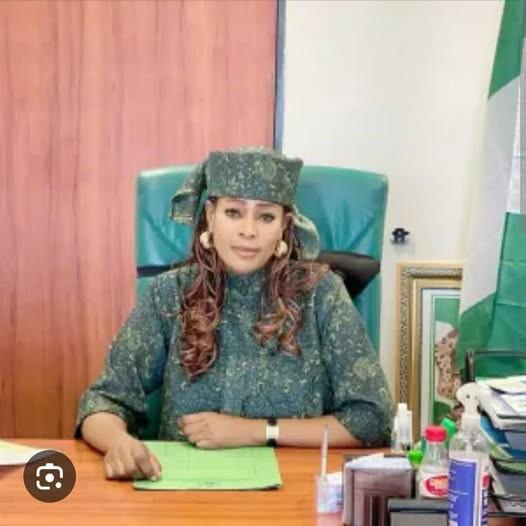
She continues to serve as a touchstone for young professionals, particularly women, looking to enter politics or public administration. Her ability to balance public expectation with personal focus serves as a lesson in long-term relevance—something few public figures manage to achieve in Nigeria’s fast-moving political landscape.
Looking Ahead: The Power of Purpose
As Nigeria grapples with deepening policy challenges—economic diversification, infrastructure development, gender inclusion—leaders like Lynda Chuba-Ikpeazu become increasingly important. Her career reminds us that influence is not always loud, but it can be enduring.
Her next chapter may well see deeper involvement in national reforms, broader mentorship of emerging leaders, or perhaps new policy initiatives that build on her maritime and educational expertise. Whatever the direction, her foundation—grounded in discipline, exposure, and commitment—remains firm.
Lynda Chuba-Ikpeazu is not merely a former beauty queen or a sitting lawmaker. She is a symbol of what is possible when education, elegance, and public responsibility intersect. In an era demanding more from its leaders, she offers an example of steady, principled leadership in both public perception and institutional contribution.
Her career is not simply a matter of public service—it is a continued investment in the idea that representation matters, and that influence, when used wisely, can shape nations.
For a better experience in commenting on BoldWalk, please ensure you are logged in on our site before commenting or simply use any of your existing online accounts like google to sign-in. See the dropdown select Login option below.