

In every conversation about progress, numbers are tossed around—GDP, infrastructure, job creation. Yet the most profound indicator of a nation’s development is not built in cement and steel, but in life itself—specifically, in whether mothers survive childbirth. That is where real leadership is tested. That is where governance meets humanity.
In Ondo State, Nigeria, maternal health did more than test leadership—it defined it.
 Genesis of a Vision: Dr. Olusegun Mimiko’s 2009 Breakthrough
In 2008, the Nigeria Demographic and Health Survey (NDHS) exposed a grim reality: Ondo State had the worst maternal health indices in the Southwest, with a maternal mortality ratio (MMR) of 745 per 100,000 live births—well above the national average of 545. Globally, Nigeria ranked among the ten worst countries for maternal mortality.
Faced with this crisis, Dr. Olusegun Mimiko, the then Governor of Ondo State (2009–2017), did not flinch. He commissioned a study, gathered local and international best practices, and launched a bold, homegrown solution: the Abiye (Yoruba for “Safe Motherhood”) Programme, a comprehensive maternal health system designed to ensure no woman would die giving life.

Abiye’s Four-Pillar Response to the ‘Four Delays’
Abiye was built to eliminate the four delays responsible for maternal deaths:
1. Delay in Deciding to Seek Care
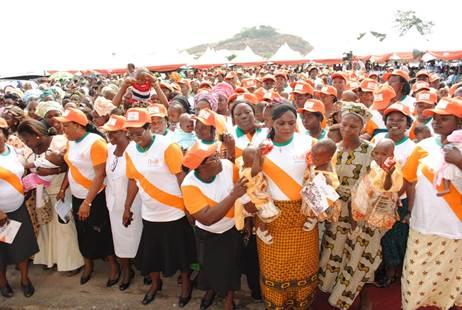
Many women delay or avoid seeking care due to cultural beliefs or lack of awareness. Under Abiye, each pregnant woman was assigned a Health Ranger—a specially trained community health worker responsible for 25 women. These rangers conducted regular home visits and provided prenatal education. Every woman was also given a government-funded mobile phone, enabling toll-free contact with their health ranger, health facilities, and even government officials.
2. Delay in Reaching a Health Facility
In rural areas, roads are poor and transport options scarce. To address this, the state deployed a fleet of motorcycles, tricycles (Keke ambulances), and full ambulances, all tailored to different terrains. These vehicles, manned by health rangers or facility staff, ensured that distance was no longer a death sentence.
3. Delay in Receiving Adequate Care
Many health facilities lacked personnel, drugs, or basic equipment. Abiye tackled this by renovating existing primary health centers, constructing new ones, and equipping them with qualified staff, medications, and supplies. Community Health Extension Workers were retrained, underutilized personnel were absorbed, and hospital referral systems were strengthened.
4. Delay in Getting Referred to Higher Care
For critical cases, swift referral is vital. Ondo State built two Mother and Child Hospitals (MCHs)—tertiary, state-funded, specialist hospitals in Akure and Ondo City. These hospitals offer free consultations, surgery, laboratory tests, medications, and admissions. They became the apex of the maternal health referral network, serving not only Ondo citizens but patients from neighboring states.
The Role of Technology in Saving Lives
Abiye’s genius was in marrying simplicity with innovation. The mobile phone strategy—one line, one ranger, one mother—allowed real-time tracking of high-risk pregnancies, coordinated emergency evacuations, and created a culture of accountability. Each call was monitored. Each ranger was supervised. It was digital infrastructure with human empathy at its core.
Agbebiye: When Culture and Health Work Together
In 2014, another layer was added to this revolution. Following a 2012 report showing that over 90% of maternal deaths were linked to traditional birth attendants (TBAs), Mimiko's administration launched Agbebiye (Yoruba: “Safe Birth Attendant”). Rather than outlawing TBAs—a move that would have alienated communities—the government partnered with them.
TBAs and faith-based birth homes were incentivized to refer pregnant women to government facilities. In return, they received:
- Cash rewards for each safe hospital delivery
- Vocational training and alternative skills
- Microfinance for new businesses
It was smart. It was inclusive. It worked.
A Legacy Sustained: Governor Lucky Aiyedatiwa’s Commitment to Continuity
While Dr. Mimiko laid the foundation, what sets Ondo apart is what came next: sustained leadership.
 Under the current administration of Governor Lucky Aiyedatiwa, the Abiye and Agbebiye programmes have not only survived—they have flourished.
His government has:
- Continued full state funding of the MCHs and Health Rangers
- Supported the expansion of maternal services across all LGAs
- Strengthened research collaborations, including those with the London School of Hygiene & Tropical Medicine
- Advocated for further inclusion in World Bank’s Results-Based Financing (RBF) programs
In a political culture where policies often die with their originators, Aiyedatiwa’s choice to honor and expand Abiye is a rare act of public service maturity.

Numbers That Speak for Themselves
- 84.9% reduction in maternal mortality (from 745 in 2009 to 112 per 100,000 live births by 2016)
- 70% reduction in deaths reported by CEMDOS (Confidential Enquiry into Maternal Deaths in Ondo State)
- Over 70,000 safe deliveries facilitated across MCH hospitals
- Hundreds of TBAs retrained and integrated into formal systems
- Ondo remains the only Nigerian state to fully meet MDG 5 on maternal health
Global Recognition and Benchmarking
- Recognized by the World Bank as a model programme
- Listed in the UNDP’s innovation paper on maternal health in Africa
- Featured by UNICEF, CSIS, and the United Nations Foundation
- Accredited for postgraduate training in obstetrics and gynecology
- Cited in policy forums from Ghana to Ethiopia as a replicable African success story
Challenges and the Road Ahead
Not all has been smooth. In 2015, the state faced backlash for linking access to free maternal care to the Kaadi Igbe Ayo (residency card) system—an attempt to manage the heavy influx of out-of-state patients. Additionally, Nigeria’s 2016 recession strained public financing.
Yet, the government responded with resilience:
- Tapping into international donor funds
- Monetizing the academic and training arms of the MCHs
- Scaling internally generated revenue through innovation
A Model for Africa
The Abiye story is a powerful case study in what happens when vision meets courage, and policy meets people.
From Dr. Olusegun Mimiko’s bold beginning in 2009, to Governor Lucky Aiyedatiwa’s steadfast continuation in 2025, the lesson is clear: governance is not just about starting well—it’s about finishing strong.
If every Nigerian state adopted a similar approach—rooted in community, powered by innovation, and sustained across administrations—maternal mortality would be history, not statistics.
This is not just the story of a programme.
It is the story of leadership, legacy, and life itself.
For a better experience in commenting on BoldWalk, please ensure you are logged in on our site before commenting or simply use any of your existing online accounts like google to sign-in. See the dropdown select Login option below.